
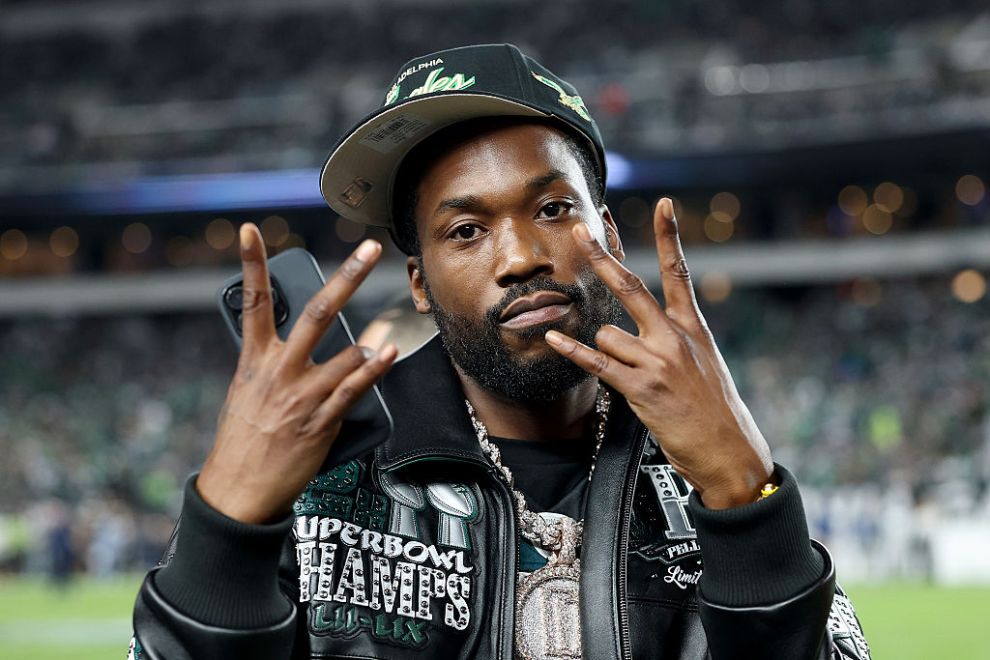
Meek Mill is weighing in on hip-hop’s latest cultural flashpoint, using a series of blunt posts on X to challenge how artists talk about the streets—and what they actually give back.
On Dec. 20, the Philadelphia rap superstar responded to the growing “F— the Streets” rhetoric being echoed across the genre, offering a more complicated perspective rooted in responsibility, lived experience, and accountability.
Addressing rappers and public figures who still lean on street imagery, Meek urged them to think beyond protection and optics. “To the guys pushing that ‘street sht,’ make sure feeding and supplying resources and opportunities for your family and community,” he wrote.
He sharpened the point by adding, “Not just killers you paying to protect you. Make sure you didn’t put the streets before your ‘real family.’ A lot of n***s using the streets.”
Meek’s comments arrived as artists, including Young Thug, G Herbo, Lil Baby, Quavo, 21 Savage, YFN Lucci, and Offset, have publicly distanced themselves from street affiliations. Rather than rejecting that shift, Meek framed his posts as a call for context. In his view, slogans fall short without tangible action.
Meek Mill on “F— The Streets”
“I been up since 23,” he wrote. “I’ve changed laws, took 10% of my hood around the world, gave verses to lift whole hoods up, gave the streets jobs.”
He continued, “Went hood to hood year for year on the land. I don’t gotta explain myself.”
The statements positioned Meek’s career as evidence of sustained investment, not detachment.
He also pushed back on what he sees as selective interpretation. “Why take things out of context when we can better ourself,” he wrote, signaling frustration with online discourse that favors controversy over progress.
Meek drew a firm boundary around who should weigh in. “If you ain’t paying for no bails, lawyers or funerals don’t speak on this topic,” he posted. “This sh*t not for everybody.”
He warned that exploitation still thrives, writing, “Some people love watching the streets fail while they manipulate them.”
He closed by rejecting the phrase outright, while recognizing its intent. “It’s never f— the streets,” Meek wrote. “I knew what they meant.”
Together, the posts reinforce Meek Mill’s long-standing stance: street survival demands real responsibility. For him, leadership means resources, protection, and presence—especially when the consequences arrive.
Leave a Reply