
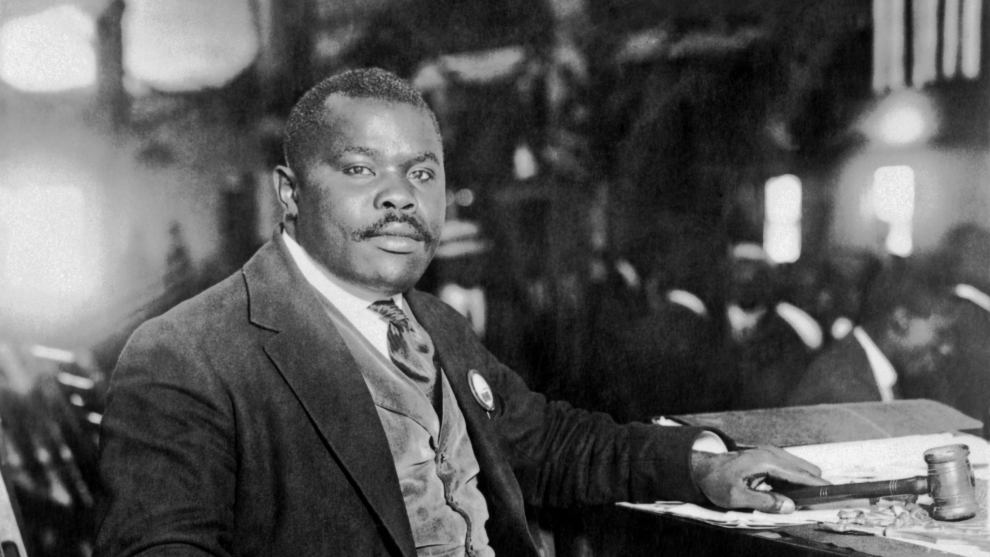
President Joe Biden posthumously pardoned Black nationalist leader Marcus Garvey on Sunday.
President Biden honors the legacy of a man whose ideas shaped the civil rights movement and inspired figures like Malcolm X. Garvey, a fierce advocate for racial pride and self-determination, was convicted of mail fraud in the 1920s in what supporters argue was a politically motivated attempt to silence him. Following his conviction, Garvey was deported to Jamaica, his birthplace, where he lived until his death in 1940.
Garvey’s influence was monumental. The Rev. Martin Luther King Jr. once described him as the first man to give millions of Black people a collective “sense of dignity and destiny.” Congressional leaders had long urged Biden to pardon Garvey, underscoring the importance of correcting historical injustices. This act of clemency serves as a powerful acknowledgment of Garvey’s contributions to the struggle for equality and justice.
Biden, who leaves office on Monday, has used his final days in office to issue a flurry of pardons and commutations, setting a presidential record for individual acts of clemency. Among those pardoned were prominent advocates for immigrant rights, criminal justice reform, and gun violence prevention, as well as a high-ranking Virginia lawmaker. These actions reflect Biden’s commitment to what he calls the “sacred covenant of our nation.”
Speaking at the Royal Missionary Baptist Church in South Carolina, Biden emphasized the importance of unity and compassion, particularly in moments of human fallibility. “When people we love fall and make mistakes, we pick them back up,” he said. “We don’t turn on each other. We lean into each other. That’s the sacred covenant of our nation. We pledge allegiance not just to an idea but to each other.”
In one of his most controversial moves, Biden also issued a broad pardon for his son, Hunter Biden, who had faced prosecution for gun and tax offenses. Additionally, the president commuted the sentences of nearly 2,500 individuals convicted of nonviolent drug offenses and reduced the punishments of 37 people on federal death row to life imprisonment. These actions stand in sharp contrast to the policies of President-elect Donald Trump, who oversaw 13 federal executions during his first term, an unprecedented number carried out amid the COVID-19 pandemic.
While a pardon erases guilt and punishment, a commutation only reduces or eliminates the sentence without exonerating the individual. Biden’s decisions, particularly the posthumous pardon of Marcus Garvey, underscore his efforts to address systemic inequities and offer a measure of justice, even as the political landscape shifts.
Leave a Reply