
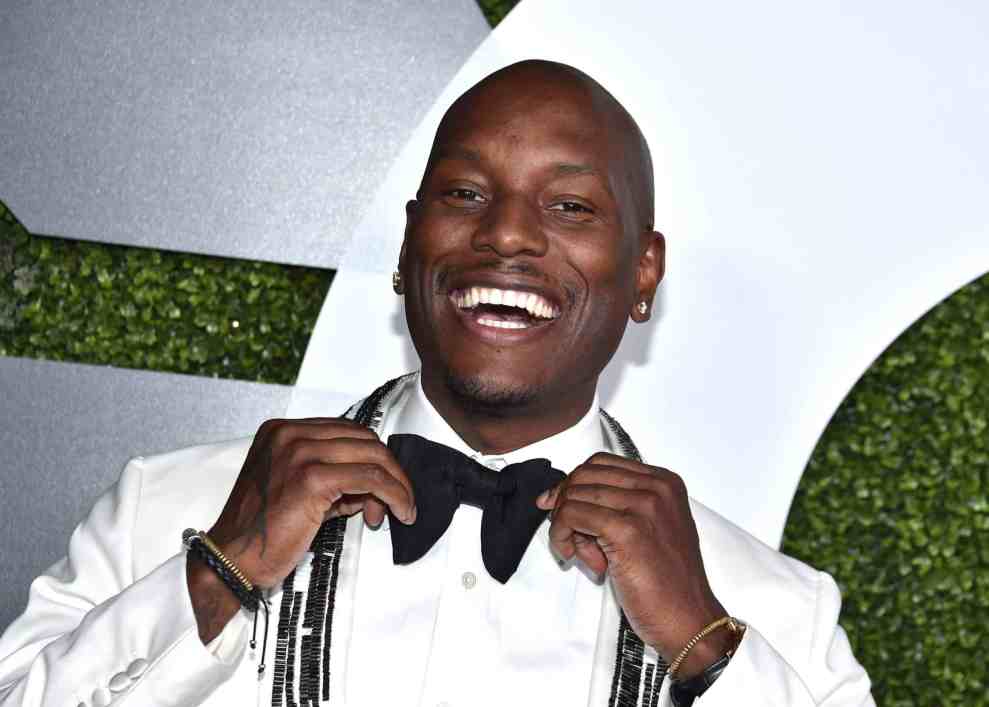
Tyrese is no stranger to controversy, but his latest remarks about R. Kelly have placed him squarely in the middle of another viral moment.
During a recent performance in Chicago, the Grammy-nominated singer and actor stopped mid-show to deliver a statement that quickly reverberated across social media. “I know the city I’m in. I’ma say it again. Feel whatever you want to feel, I got no f*cks to give. The King of R&B is R. Kelly… Chi-town, baby,” Tyrese told the audience.
The declaration sparked a mixed reaction, with some in the crowd cheering while others appeared unsettled. The honor acknowledges Kelly’s accolades while ignoring his allegations.
The weight of Tyrese’s comments is amplified by the city where he made them. Chicago has long claimed R. Kelly as a native son, even as his reputation collapsed in the wake of federal convictions in 2022 for sex trafficking and child exploitation. Despite his imprisonment, many in his hometown still view him as an architect of modern R&B.
Kelly’s musical influence is undeniable. Across the 1990s and 2000s, he redefined R&B with chart-topping singles like “Bump N’ Grind” and the Grammy-winning “I Believe I Can Fly.”
Beyond his own hits, he penned and produced songs that shaped the careers of countless artists. Yet those achievements are now inseparable from the decades of allegations that culminated in his downfall, leaving his legacy deeply fractured.
By calling Kelly the “King of R&B,” Tyrese reignited the long-running debate over whether an artist’s creative contributions can—or should—be separated from their personal crimes. His defiant tone, punctuated with “I got no f*cks to give,” suggested he anticipated backlash but stood firm in honoring Kelly’s musical imprint.
The moment adds another layer to the broader cultural reckoning around Kelly’s legacy. For some, his catalogue remains too influential to ignore; for others, celebrating his artistry risks erasing the pain of his victims.
Tyrese’s statement doesn’t resolve the debate—it sharpens it, forcing audiences to grapple once again with the uneasy intersection of brilliance and abuse in popular music.
Leave a Reply