
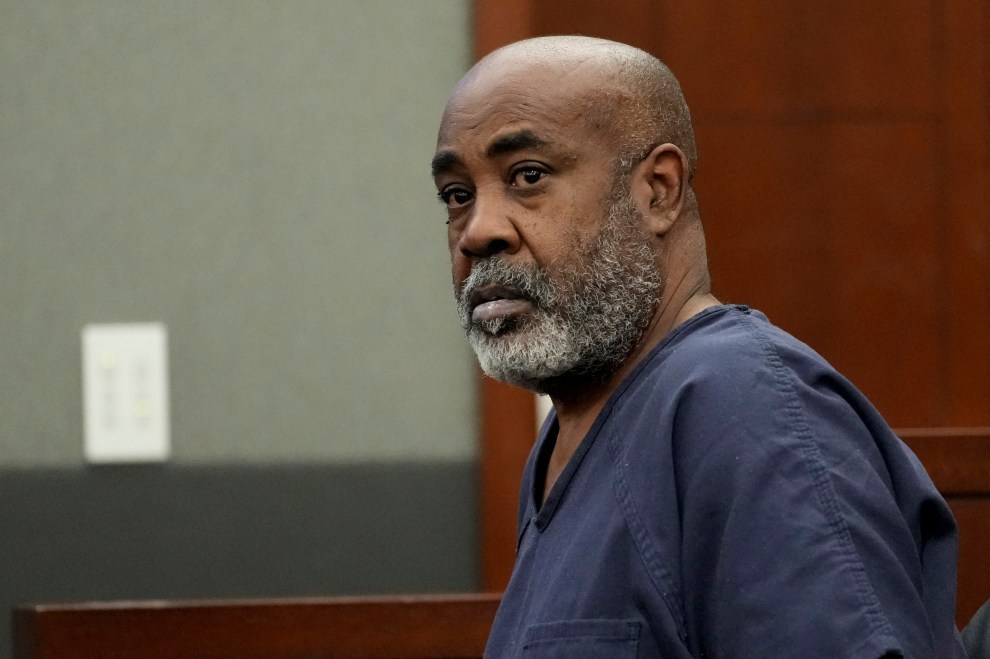
A Nevada jury on Monday found Duane “Keffe D” Davis guilty of first-degree murder for orchestrating the 1996 drive-by shooting that killed hip-hop legend Tupac Shakur.
The verdict marks the first ever conviction in a case that remained one of the most infamous unsolved mysteries in the music industry for nearly 30 years. Davis, 63, was convicted of murder with use of a deadly weapon with the intent to promote, further or assist a criminal gang. The 12-member jury deliberated for approximately three hours following a trial that spanned several weeks.
Davis now faces a potential maximum sentence of life in prison for his role in the slaying of the 25-year-old rapper. While prosecutors never alleged that Davis pulled the trigger himself, they successfully argued that he acted as the “shot caller” for the group. Chief Deputy District Attorney Binu Palal told the court that Davis acquired the firearm and “went hunting” for Shakur and Death Row Records co-founder Marion “Suge” Knight after members of the rapper’s entourage attacked Davis’ nephew, Orlando “Baby Lane” Anderson, earlier that evening at the MGM Grand.
“The core facts remain. The material facts remain,” Palal said during closing arguments, emphasizing that Davis repeatedly placed himself inside the white Cadillac from which the fatal rounds were fired. Prosecutors relied heavily on Davis’ own public admissions in media interviews and his 2019 memoir to build their case.
Defense attorney Michael Sanft countered by arguing that the prosecution lacked physical evidence, such as surveillance footage or phone records, linking Davis to the crime scene on Sept. 7, 1996. Sanft characterized his client’s previous statements as exaggerated “tall tales” intended for financial gain or notoriety, telling the jury that Davis was “full of crap.” Shakur was shot while sitting in a vehicle at a red light near the Las Vegas Strip. He died six days later from his injuries, while Knight survived his wounds.
The shooter was long suspected to be Anderson, who was killed in an unrelated shooting in 1998. The trial featured testimony from 24 prosecution witnesses and three defense witnesses.
Davis chose not to testify in his own defense during the proceedings. The conviction brings a legal conclusion to a case that has inspired countless documentaries and conspiracy theories since the height of the 1990s West Coast-East Coast rap rivalry.
Leave a Reply