
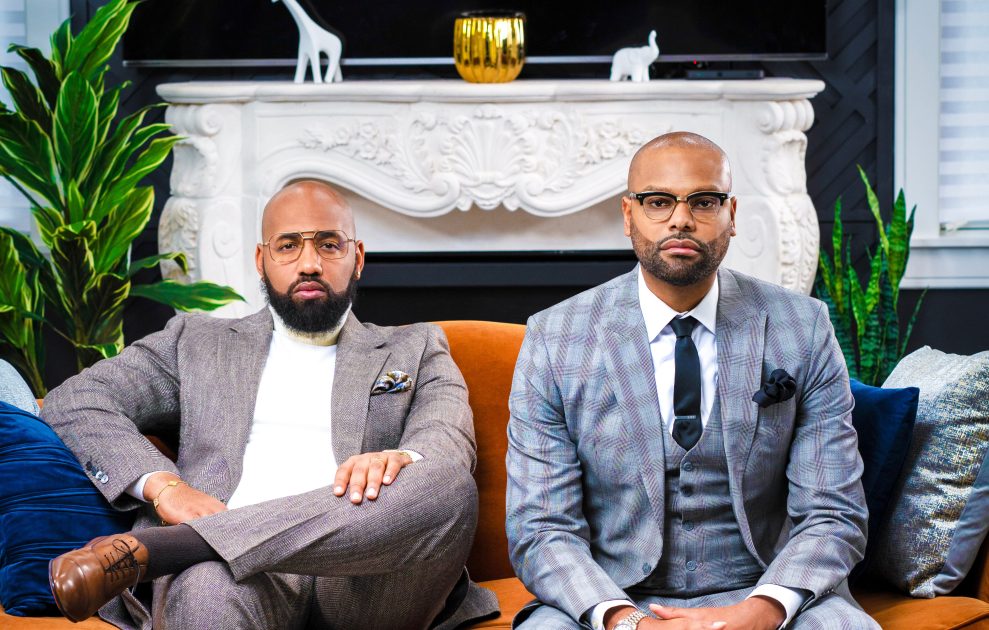
Earn Your Leisure is setting the tone for financial success in 2026. Known for breaking down money, investing, and wealth-building in a way that’s both practical and culturally relevant, Rashad Bilal and Troy Millings is sharing key financial principles everyone should have in their playbook this year.
Ahead of the release of the paperback edition of their New York Times bestselling book You Deserve to Be Rich, Earn Your Leisure joined HOT 97 for a powerful conversation centered on smarter money management, long-term wealth strategies, building financial discipline, avoiding common pitfalls, and positioning yourself to win in an ever-changing economy.
What are the top three financial principles everyone should bring into 2026 if you had to say, if you had to pick three?
Troy Millings: I would say in this kind of a principle that we’ve lived by is that having one income is too close to none, especially in this economic environment where we’re seeing your wages being cut. We’ve seen inflation. We’ve seen affordability run amok having one income, especially here in New York City, is not even an option. So we got to figure out ways to create opportunities to have more income coming into our accounts and our households, whether that’s creating a skill, creating a business and figuring out a way to monetize that. The second one is that is pretty, pretty interesting is that ownership is the new job security. I read that in a report earlier this week when you’re talking about CPI, and it was that idea around, you know, people and I come from that world where it was like the w2 employee, you know, if I got tenure in education, I felt like I was secure. But again, that’s still only guarantees that I have on paycheck. And so we got to figure out ways to how do we create things that we own. The last one, and this is for the world of like reality TV social media, is that, let’s talk more execution. Oh yes, I think people are watching things that they believe are reality, and they could be the furthest thing from that. And so people aren’t necessarily compare themselves to things that are falsehoods, and the people that are actually doing it, you know, or saying that they’re doing it, aren’t. So, you know, wealth is something that is built with patience, and sometimes that’s quiet. And so let’s talk more execution.
Rashad Bilal: Principles? Yeah. I mean, well, also like actions as well. And I think that budgeting, it starts with budgeting. So I think that everybody should know. Most people don’t even know how much money is coming in and coming out. It’s like if you run a business and you don’t know how much money is coming in coming out, then that business not gonna work. Most people are just living their life, they don’t really know how much money they make. Because even if you know how much money you make, you know, you don’t know how much you spend, you don’t know how much taxes are actually coming out. You know how much you’re putting in your 401 K. You forgot how much your health insurance cost. You forgot about how much FICO is. You forgot so much different things you’re paying for your kids school. It just comes out automatically, especially now auto pay. So you don’t, you don’t even know. So really, having a gage of how much money’s coming in, how much money coming out, that’s really the best way it starts.
Tai Marie: I think that is important, very important. And I love that you said that, and I love that you also mentioned, and you mentioned investing, and I wanted to ask you, when it comes to like saving, investing, spending..
how can we as a culture, like shift our perspective or change our mind going into the new year when it comes to just like saving, investing and spending?
Rashad Bilal: I mean, I think it goes back to how you how you view money like, you know, I think as a culture, we really have been brought up to think about money as a as a tool to spend like. So it’s like, okay, I work a job and I have money, and then I’m gonna use that money to pay my bills or use that money to buy outfit, or use that money to go to Miami. And that’s a cycle of, get money, spend money. Get money, spend money. Even though a lot of those things are necessities. You have to, you know, pay your bills. But very, very few people actually look at it as as an opportunity to make more money. And that’s, that’s what really, that’s really, when you understand money, that’s, that’s the real benefit of money, it gives you an opportunity to make more money. So when you look at it from that standpoint, you’re more inclined to to invest, you’re more you’re more inclined not to spend money frivolously, because you look at the dollar that you saved as $1 earned and $1 that you spent as $1 wasted.
Troy Millings: Yeah, I think if they, if they reverse engineer and start thinking about what wealth is, right? Like, how do we define that? And they are easy, and it feels like it’s easy or simple ways to explain it, right? Like, how do we obtain it? If you take the things that you actually listed, right? You said saving, you said spending, you said investing. Well, one, can you spend your way to wealth? No, can you save your way to wealth? No, can you invest your way to wealth? Yes, right, so that’s the outcome as well. How do we get there? And the answer is actually investing it. And we’ve been taught to do the opposite. And in fact, we over index it in the other right? We over indexing the spending we’ve tried to save throughout the course of our communities, for sure, right until we understand how saving works. Yes, it’s important to have emergency funds three to six months, but after that, like now what? Right? Like, we had the disposable income, we’ve done the responsible thing and have reserves. How do we get to wealth? Right? Like we were taught, put your money in a bank, put your money in the bank. And so we understand how banks work, right? They actually lend out our money, charge interest on it, and make money off of it. And so when we understand the reverse engineering piece, right, if we put investment first, then we understand like that is wealth building, right?
Tai Marie: I love that. Very, very important. Y’all are like teaching me. Let me just say that I am in a space of I am a young professional, and I feel like at this point, like I just turned 30, and I feel like I’m making more money than I’ve made ever in my life. And so I wanted to ask, like, it’s so easy for like, young professionals and creatives to feel like financially behind, especially, you know, with the world of social media..
what would you say to a young professional who feels like they’re financially behind. Like, is it okay to build financial wealth at your own pace, or should we be learning to invest like, as soon as we start working?
Troy Millings: So, I mean, I think we probably say the same things, but yeah, the earlier you start, the better. But are you running it at your own pace? I mean, that’s, that’s why it’s your race. I think it’s important to to not compare yourself to others, right? That’s why it’s your race. And so your race will. Start when you feel like you’re comfortable, when you feel like you’re educated, when you’ve actually done the due diligence to put your money in, potentially something that can grow. And how do you do that? Right? You have to educate yourself or build a skill around that, right? So, like I always talk about build skills, right? If you build a skill that can build leverage, right? And if you build leverage, you can build wealth, right? So right so right now, you had a great you have a great problem, right? You make it more money than you’ve ever done. But now what? Right? Like, you got a skill, you’re leveraging your skill, and like now that you know, right? You can educate yourself on investments in different what type of ways to have your money make money to build that wealth.
Rashad Bilal: Yeah, I mean, the earlier you start, the better. So compounding interest, that’s something that’s vitally important. And you know, every mathematical equation that you could run shows that even a small amount invested on a continuous basis when you’re young will have, you know, greater impact than people trying to do very large amounts later on trying to play catch up. So, you know that’s important for people to understand. Like, the earlier you start, the better, the better you’re going to be.
What’s a financial move young professionals often delay, but really shouldn’t?
Rashad Bilal: I think they delay actually getting serious about their finances, or getting serious about business. You know, it’s like, you always got tomorrow. So it’s like, all right, I’m not really gonna get into this investment thing right now. I’m not gonna put into my 401 k right now. Or I’m not even gonna start a business right now. I got an idea. But, you know, I just wait a little bit and I feel like, you know, procrastination is one of the biggest things that causes people to not be where they want to be in life. And you know, it starts off with just a year, then it turns into two years, and it turns into before you know it, you know, 20 years later, you still haven’t done what you wanted to do. So no better time than the present, and definitely should never procrastinate or think that you have more time than you have because, like I said, you can have a lot of time, but if you start early, even in for business, you start a business early, it doesn’t work out, but you’ve learned so many valuable lessons that that that’s going to be helpful to to you later on.
Tai Marie: Yes, I agree. Needed that. Thank you for saying that, because I needed to hear it all. So we’re talking about going into the end of the year and the start of next year. And I wanted to ask you, from your perspective..
what does pushing the culture forward mean, and how is earn Your leisure doing that in like, a real, actual, tangible way?
Troy Millings: I think pushing the culture forward is championing this. This type of messaging, right? Champion exactly what we’re doing, right? The most important piece of any business is the education around it. Thing. Over the past seven years, we’ve done a great job of highlighting that and making people aware of it. And so, you know, we’ve over indexed in entertainment and athletics and even those in those careers and professions, people are making money, and a lot of times they don’t know what to do with it. And so I feel like we could that’s coming at a better time, right? Because you’re starting to see a shift. You’re starting to see more people take their financial future serious. You’re seeing more people invest you see more people making decisions that are going to pay off for them in the future. So the educational piece around that is important, but it takes everybody, right? Like, we feel like it’s important. We think it’s the most important thing, but we need, you know, everyone to feel like it’s important. It starts from schools. It starts to community organizations, and it starts from, you know, local government and, you know, federal government, right?
Tai Marie: I love that. I often feel like people when they hear financial literacy, they think is some obscured thing that just can’t be taught or can’t be learned. I feel like it’s so disconnected from our community, and I think that this is like the definition of pushing the culture forward, like I feel like we need to learn all aspects of life, not just how to get fly or how to live a lavish life, or have all of the things you want, but how to like, take care of it, how to invest in it. So I do think you guys are pushing the culture forward.
Troy Millings: Appreciate that. Appreciate that. We can get fly too though,
Tai Marie: Yeah, yeah. We can do that too. We could do that too. You’re right. Alright. So Rashad, I wanted to ask you..
if you could leave your listeners and our listeners with one message going into 2026 surrounding, you know, financial literacy, or just the culture in general, or maybe just something that’ll give us, like hope. I know we’re in a very tough time. What would it be?
Rashad Bilal: You know, be mindful of what you pay attention to, because that’s definitely gonna determine where you end up. So there’s a lot of distractions right now, but there’s also a lot of opportunity. There’s a lot tremendous level of access when it comes to technology has really leveled the playing field with people learning and being able to build businesses and do a variety of different things. So I would feel like, you know, now is not a time to really get discouraged too much as far as everything that’s going on. Look at it from a standpoint of what you can actually do and how you can benefit from everything that’s available to you, from artificial intelligence to all of the information that’s there, you know, as you could really change your life in a couple years if you really stay focused, but if not, if you focus all your energy on just negativity and just entertainment.
Tai Marie: Okay, before I let y’all go, Troy, I wanted to ask you..
when you think about 2026 what excites you most? Like from a financial from a financial standpoint, and just as we’re growing as a culture?
Troy Millings: We’re here, we’re living, we’re breathing. We got opportunity to be great, we got an opportunity to impact we got opportunity to change lives. We’d be remiss if we didn’t take advantage of that. You know, even now for us on a personal level, like us expanding the brand, you know, doing into going internationally, but a lot of time on the continent, getting curriculum in the schools, all those things excite me, because it’s like, Wait, we got a chance to impact more lives, right? Like, that’s how legacy is always built. And so every, every day, it’s like, Yo, who’s going to be our legacy writers, whose lives can we impact? How can we change? How can we, you know, make what we’re doing even more important to the masses? So yeah, opportunity excites me. That’s what I’m looking forward to in 2026, more chances.
Tai Marie: Are you guys working on anything we can look forward to? Heading into the new year
Rashad Bilal: Invest Fest. That’s our big event that we have every every year. So we’ll be we’ll be releasing information about that very, very shortly, but that is definitely something that been working hard on. This is year six. So every year we try to add different elements and make it bigger than it was a year before. So last year was the biggest year that biggest year that we’ve had. So it’s, it’s definitely a high, a high mark to hit, but we’ve been working very hard on that. So that’s coming.
Tai Marie: Any exclusive details for HOT 97?
Rashad Bilal: We need to get HOT 97 at Invest Fest.
Troy Millings: That’s the first and foremost, take part in it. Yeah, I’ll say this. We have a legendary streak of having a billionaire guest at invest fest, and that streak will continue next year as well. So stay tuned.
Leave a Reply