
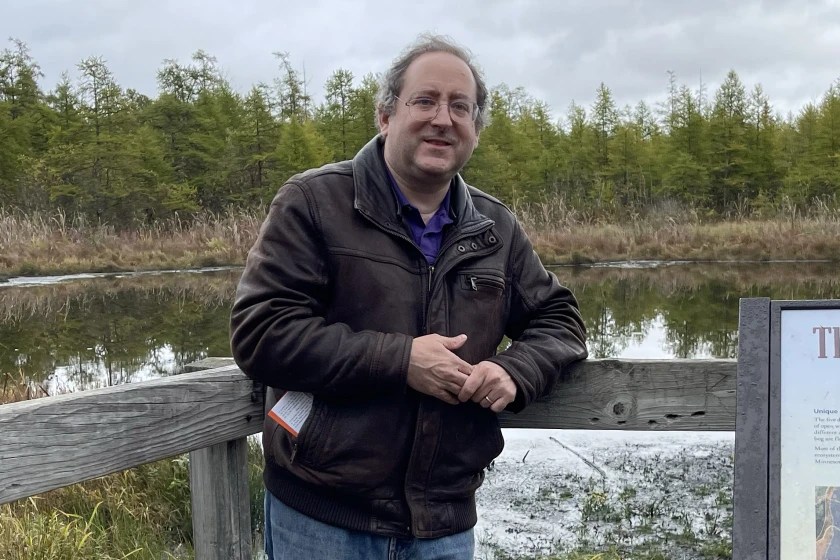
Chicago hip-hop has lost one of its early radio champions this week in Mark “DJ Ice Box” Josephson, whose broadcasts helped introduce local rap to a wider audience, who died July 19 at 58.
Josephson was a University of Chicago student in 1986 when he began spinning records at WHPK-FM 88.5. He studied Near Eastern languages and civilizations while hosting late-night rap as DJ Ice Box.
WHPK’s rap program launched in 1984. At the time, Chicago’s commercial stations rarely played hip-hop. The station operated at only 100 watts, but its signal reached much of the South Side.
For young rappers, WHPK became a crucial connection to Chicago’s emerging hip-hop culture.
“We stumbled across WHPK one day in the mid-’80s,” Darrell “Artistic” Roberts recalled. “They rapping.”
Roberts belonged to the Curfew Crew, a group of teenage rappers from Chicago’s 101st Street and State Street area. The crew battled other neighborhood groups and taped WHPK broadcasts.
Josephson and his fellow DJs played rap records sourced from New York. They also welcomed tapes from Chicago artists seeking their first radio exposure.
Rappers sometimes called the station from a nearby payphone. DJs would collect their tapes and occasionally invite the artists inside.
CHICAGO Hip-Hop DJ Mark “DJ Ice Box” Josephson Dead At 58
That connection helped Roberts get his first song played on Chicago radio.
C. “Kingdom Rock” Sanders, a Curfew Crew contemporary, later co-founded the Chicago Hip Hop Heritage Museum. He remembered Josephson as an unconventional figure behind the turntables.
“He was a slender, Caucasian, Jewish man with glasses and an Afro,” Sanders said. “You would not expect him to be playing the music he was playing.”
John Schauer, another WHPK DJ known as J.P. Chill, said the pair never tried to mimic Black culture.
“We were just like, ‘We are who we are,’” Schauer said. “We were different, and we were accepted.”
Roberts said their connection transcended race. “Our spirits connected us to the culture,” he said.
Josephson later became an attorney but never abandoned music. In 2024, he attended a Common concert wearing a WHPK shirt.
“It was surreal to see a bunch of middle-aged Black guys get so excited to meet my dad,” his son, Ari Josephson, said.
Josephson had frontotemporal dementia and ALS. He is survived by his wife, Lea, and children Ari and Shayna.
Leave a Reply