
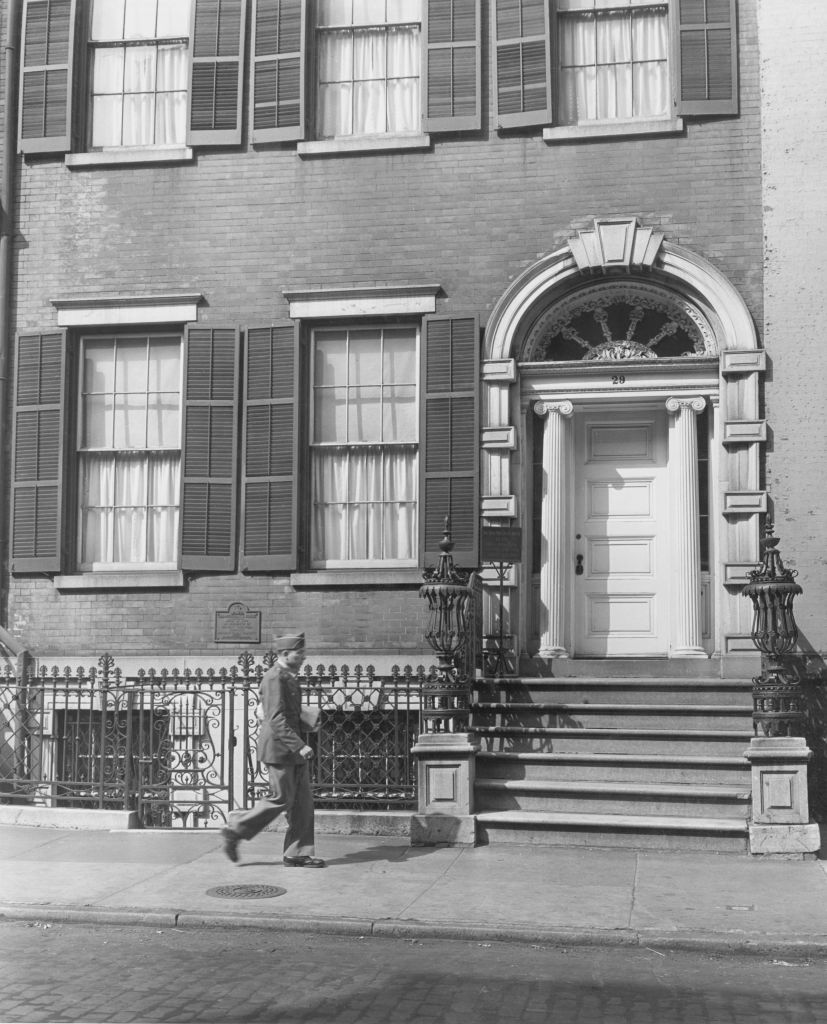
The Merchant’s House Museum, a slim 19th-century townhouse in Manhattan’s NoHo neighborhood, has discovered a link to the underground railroad just in time for Black History Month. Spectrum New York News 1 broke the news on Tuesday (Feb. 9).
Located on East Fourth Street, the building is long celebrated for its preservation of the “old New York.” The building’s underground railroad discovery is set as a concealed passageway hidden inside the landmarked home, which likely served as a safe haven for enslaved Africans fleeing the South.
Built in 1832 and opened as a museum in 1936, the former Treadwell family home showcases a ruby-red parlor with the original piano and a cast-iron stove in the kitchen. It attracts tourists seeking a glimpse of Manhattan’s history.
The underground railroad was discovered by experts upstairs, behind built-in drawers along the west wall. The railroad was part of a pivotal change for Blacks during the salvery era.
“We knew it was here but didn’t really know what we were looking at,” curator Camille Czerkowicz said.
After removing a heavy bottom drawer, investigators uncovered a rectangular cut in the floorboards. The opening leads to a tight, two-by-two-foot shaft with a ladder descending to the ground floor. Historians describe the design as deliberate and nearly invisible.
Underground Railroad Discovered At Manhattan’s Merchant’s House Museum
“I’ve been practicing historical preservation law for 30 years, and this is a generational find,” said Michael Hiller, a preservation attorney and Pratt Institute professor. “This is the most significant find in historic preservation in my career, and it’s very important that we preserve this.”
Architectural historian Patrick Ciccone credits builder Joseph Brewster, who sold the house in 1835, with embedding the hidden feature.
“Being an abolitionist was incredibly rare among white New Yorkers, especially wealthy white New Yorkers,” Ciccone said. “[Joseph Brewster] was the builder of the house, and he was able to make these choices and design it.”
City leaders say the find reshapes Manhattan’s historical narrative. “Many New Yorkers forget that we were part of the abolitionist movement,” Councilman Christopher Marte said. “This is physical evidence of what happened.”
Councilman Harvey Epstein called it “a critical piece of the overall struggle for freedom and justice.”
Now, the Merchant’s House Museum offers more than antique elegance. It stands as living proof that Manhattan once played a quiet but courageous role in the fight for freedom.
Leave a Reply